scroll
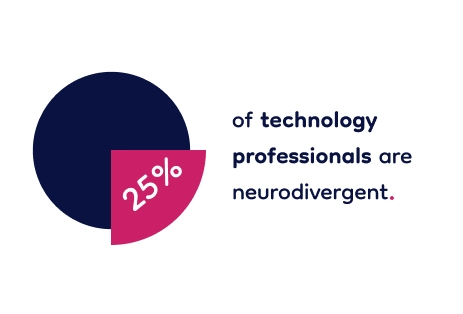
25% of tech workers are Neurodivergent.
This guide helps you hire, support, and retain Neurodivergent professionals.
What is Neurodiversity?
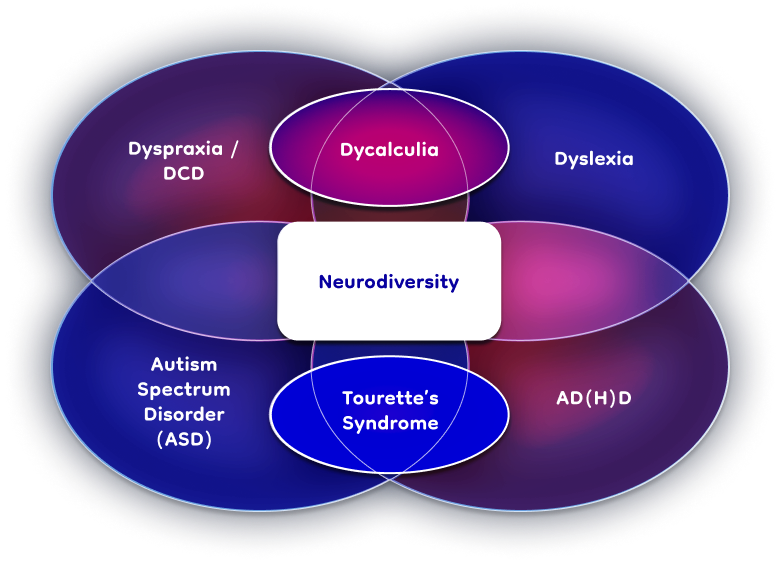
Neurodiversity is a term used to describe a variation in normal human evolution which means some people think differently to others.
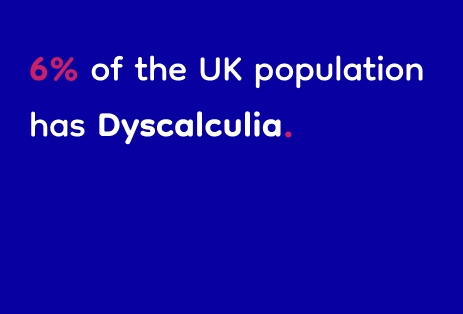
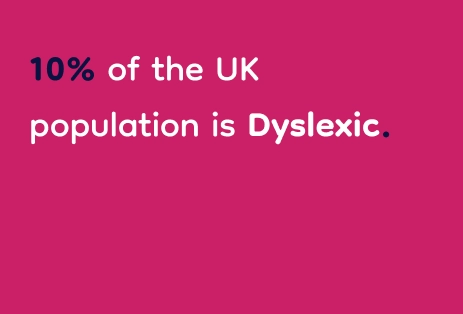
Neurodiverse conditions include autism, attention deficit hyperactivity disorder (ADHD), dyslexia, dyspraxia, Tourette syndrome and complex tic disorders.
(NHS)
Neurodiverse conditions include autism, attention deficit hyperactivity disorder (ADHD), dyslexia, dyspraxia, Tourette syndrome and complex tic disorders.
(NHS)
What is the guide?
Implementing Neurodiversity-inclusive policies and practices can be simple and cheap.
If you don't know where to start, this Guide to Neurodiversity at Work offers a simple, impactful introduction into Neurodiversity, both in the recruitment phase and beyond onboarding.
Why should I care?
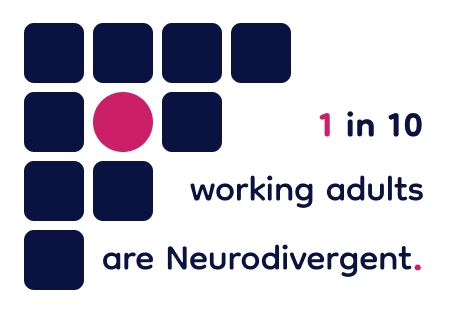
As over 20% of the UK population is neurodivergent (and over 25% in technology work cohorts), we don't believe neurodiverse inclusivity is optional, but essential.
Who is this guide for?
Leaders in technology, especially team leads, HR directors, and talent acquisition managers. Looking at your existing workforce through the lens of Neurodiversity-inclusion will bring new management perspectives, tools, and opportunities to support your staff to success.
What does the guide cover?
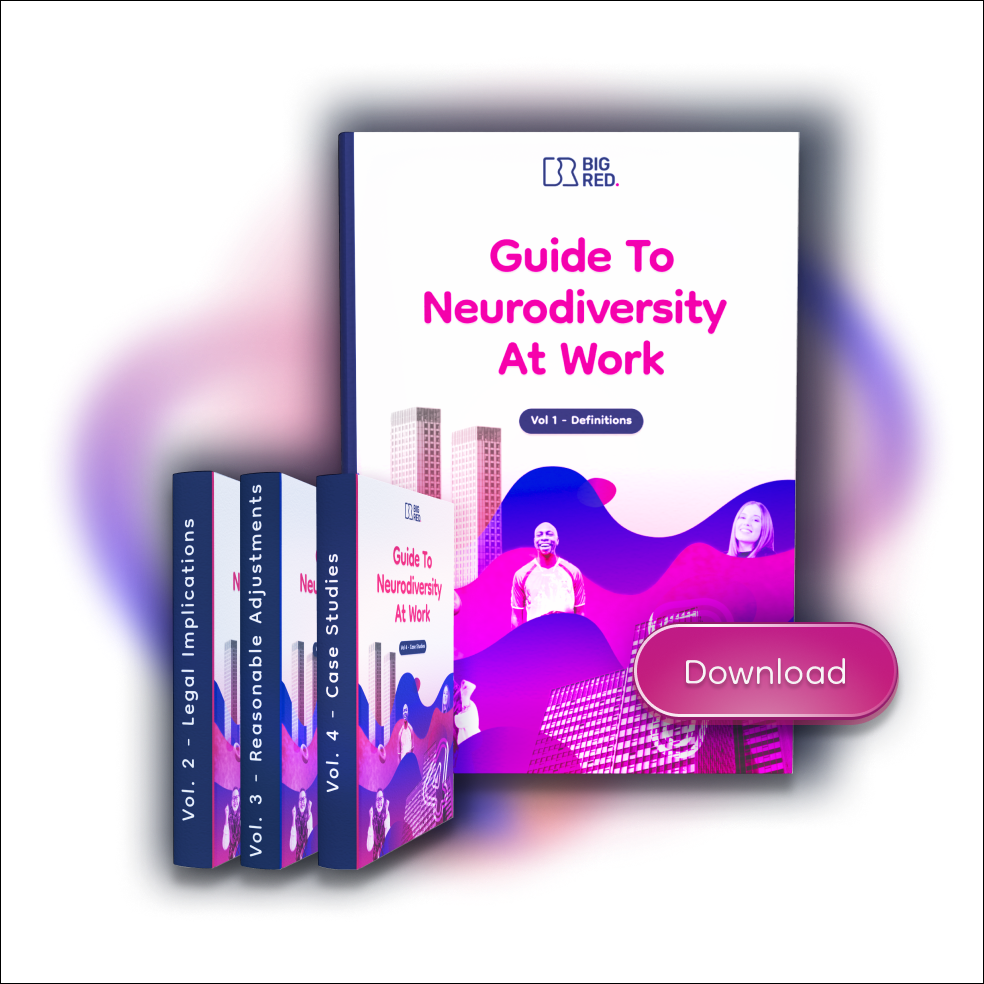
Volume 1 - Definitions
Volume 2 - Legal Implications
Volume 3 - Reasonable Adjustments
Volume 4 - Case Studies
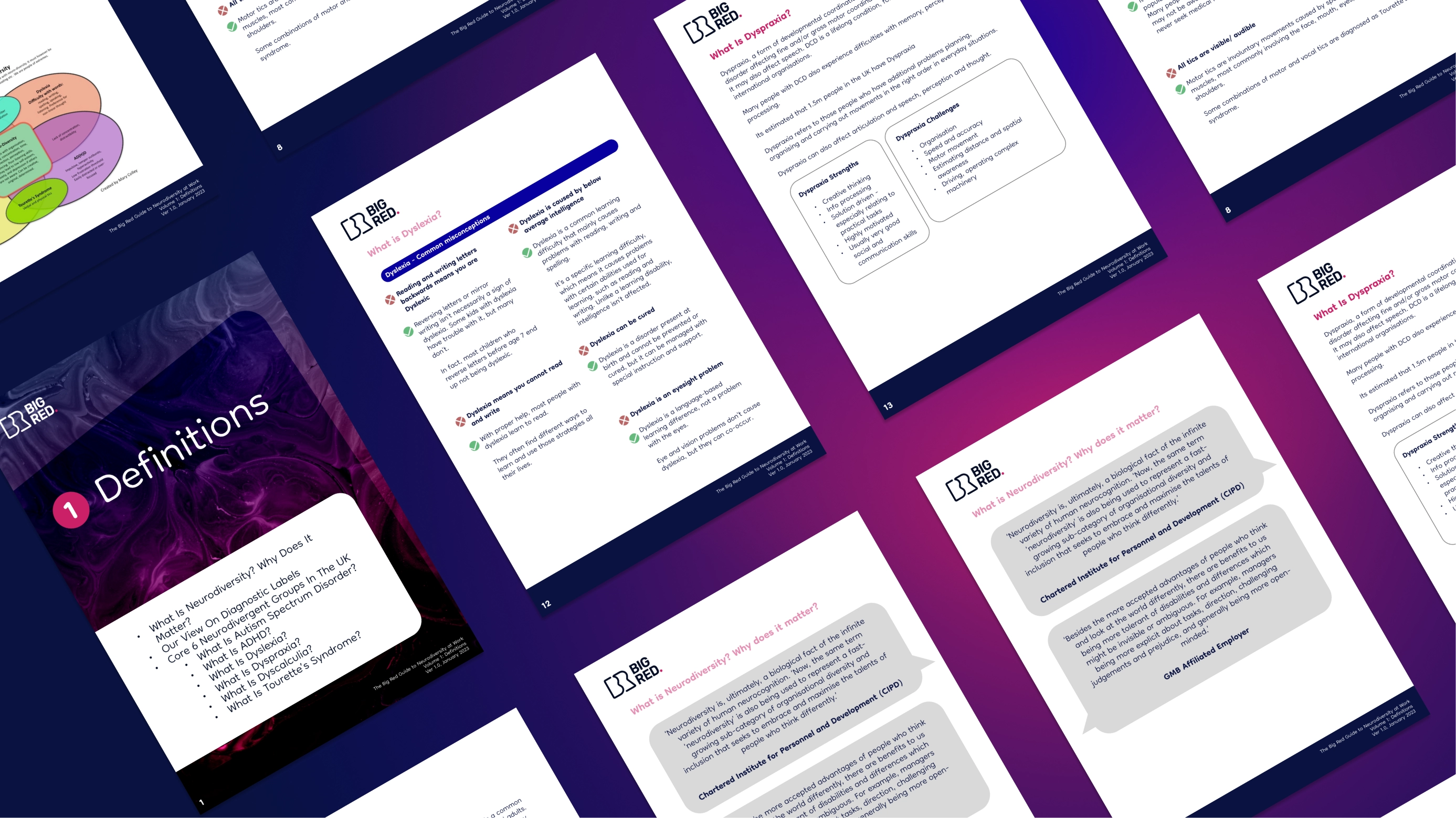
- Defines, explains, and mythbusts information on the top 6 Neurodivergent groups in the UK.
Volume 2 - Legal Implications
- Covers medical and social definitions of disability, legal definitions of disability, discrimination, and how to identify lawful reasonable adjustments.
Volume 3 - Reasonable Adjustments
- Covers reasonable adjustments in more detail, including implementation tips. Offers a brand new assessment survey to personalise support for your employees or candidates.
Volume 4 - Case Studies
- Features our interviews with a several anonymous neurodivergent technology workers so you can see what life is like in their shoes.
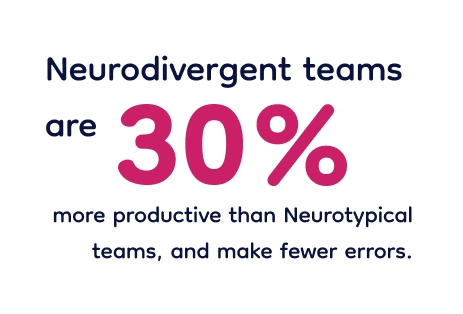
Why does Neurodiversity Inclusion Matter?